Building a House in a Village Near Trabzon: What You Need to Know About Permits and Zoning
🇹🇷 This article describes regulations and processes specific to Turkey — requirements differ in other countries.
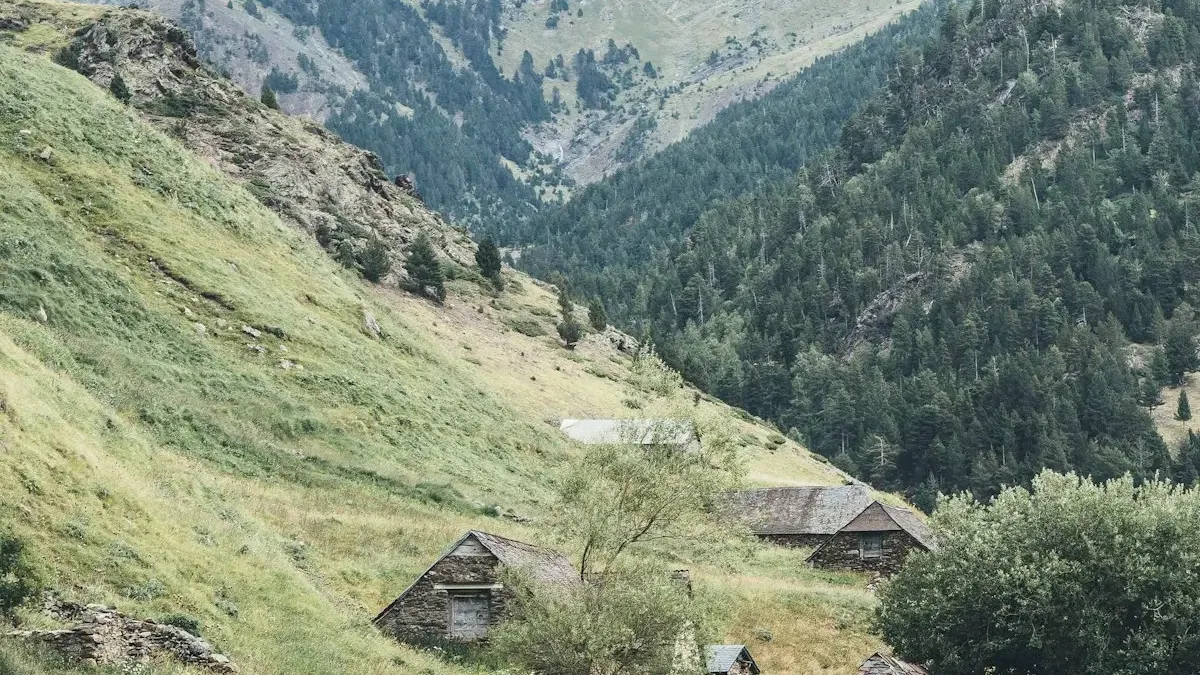
What anyone building a house in a village in Trabzon's rural Black Sea hinterland needs to know: zoning status, building permit requirements, why slope and soil conditions matter more in rural areas, and how material delivery differs from the city.
When people think about "building a house in a village," the first assumption is usually that there are fewer restrictions than in the city center, and the process will be "easier." In Trabzon's rural hinterland — in villages across districts like Yomra, Maçka, Of, and Çaykara — that assumption doesn't quite hold. The process works differently than in the city, but it isn't simpler; some items become far more decisive in a rural setting.
Village settlement boundaries and zoning status
Whether a plot falls inside or outside the "village settlement boundary" (köy yerleşik alanı) is the first question that determines what can be built on it. This boundary defines the area containing the traditional village fabric; a plot inside it is subject to different building conditions than one classified as agricultural land outside it. Building a construction plan without first clarifying where your plot stands relative to this boundary — and its zoning status — carries a serious risk of costly surprises later. We covered what to look for when evaluating a plot in our guide to buying land in Trabzon; the same questions apply to rural land, with the settlement-boundary question added on top.
"You don't need a permit in a village" — a common but false assumption
This is an assumption we hear often in the field, and it doesn't reflect reality. Whether a plot is inside or outside the village settlement boundary, building a house — with very limited exceptions — is subject to the building permit process; construction started on the expectation that "nobody asks for a permit in the village" runs into serious obstacles later, during the title deed and occupancy permit process. Who is responsible for the cost of the permit and construction supervision process is a separate question — we cover it in detail in our article on who pays for construction supervision.
Why slope and soil conditions matter more in rural areas
Flat land is the exception in the Black Sea's rural hinterland — slope is the rule. On a plot in the city center, slope is usually a measurable cost item; on rural land, slope often determines the building's siting, the access road, and whether a retaining wall is needed from the very start — see our article on building on sloped land. Soil surveys matter even more for the same reason: rural land is less likely to be a "standard" building site than land in the city center; landfill areas, former farmland, or plots close to a streambed all need particular attention — see our article on what a soil survey is.
Material and equipment access: how it differs from the city
In the city center, getting a concrete pump, crane, or truck to a construction site is routine logistics. On a village road, there's no guarantee the same equipment can get through — road width, turning radius, and load capacity aren't always there; on some plots the road narrows or keeps climbing in the last 100-200 meters. This affects both which machinery can be used and how often deliveries can happen, and it needs to be accounted for at the design stage — fixing it after the site is already set up costs more.
How an architect helps through this process
An architect's role here isn't just drawing: it's clarifying the plot's village-settlement status with the relevant authority, designing a project that matches the zoning status, preparing a complete permit application, proposing a realistic siting based on slope and soil data, and factoring site-access conditions into the design from the start. To see the official baseline cost for your project, you can use our Construction Cost / Building Class Calculator — this figure isn't a quote, it's the official baseline used in calculating the permit fee.
Frequently Asked Questions
Do you need a building permit to build a house in a village?
Yes. Whether a plot is inside or outside the village settlement boundary, building a house is subject to the building permit process with very limited exceptions; the idea that "nobody asks for a permit in the village" is a common but false assumption.
What does "village settlement boundary" mean?
The village settlement boundary defines the area containing the traditional village fabric, as determined by the relevant authority; whether a plot falls inside or outside this boundary directly affects its building conditions.
What does MEEZ Mimarlık do on rural projects?
From clarifying a plot's zoning/settlement status to preparing the permit application and proposing a siting suited to the slope and soil data, we carry out the process together within the scope of architectural consulting.