Glass Balcony Enclosures in Turkey: Do You Need a Building Permit?
🇹🇷 This article describes regulations and processes specific to Turkey. Requirements differ in other countries.
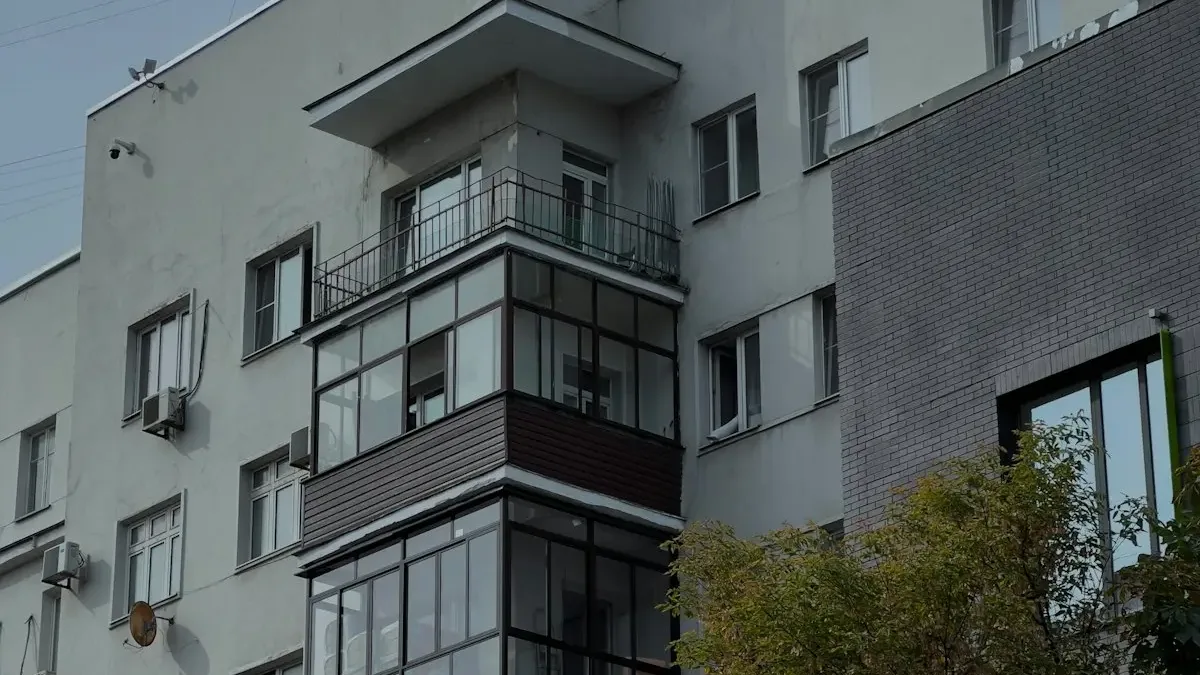
In Turkey, folding glass balcony panels need no permit (Planned Areas Zoning Regulation, Art. 59); turning the balcony into part of a room does. When owners' consent is needed.
Decision guide
What do you need to enclose your balcony?
How will you enclose the balcony?
Does the work touch the building's common parts (exterior wall, balustrade, façade)?
Yes: No building permit is needed (Art. 59/1). Because common parts are affected, the written consent of four-fifths of all owners is required (Condominium Law, Art. 19).
No: No building permit is needed (Art. 59/1). If the management plan contains a decision on glazed balconies, follow it.
Does the work touch the building's common parts (exterior wall, balustrade, façade)?
Yes: A change to a permitted building requires a new permit: an alteration project and municipal approval (Zoning Law, Art. 21). The written consent of four-fifths of the owners is also required (Condominium Law, Art. 19).
No: A change to a permitted building requires a new permit: an alteration project and municipal approval (Zoning Law, Art. 21).
This guide covers condominium residential buildings in Turkey; changes after the occupancy permit are also subject to municipal inspection.
The information in this article applies to Turkey. The short answer: fitting a balcony with opening, folding glass panels does not require a building permit. Turkey’s Planned Areas Zoning Regulation, Article 59, lists it explicitly among works that need no permit.[1] Enclosing the balcony with fixed frames or walls to make it part of a room is a different matter: it is a change to a permitted building and needs a new permit. In both cases, work touching the building's common parts raises the separate question of owners' consent.
Two separate permission questions
- Zoning / permit: Folding glass panels need no permit (Article 59/1). If a fixed enclosure makes the balcony part of a room, that change to a permitted building requires a new permit (Zoning Law, Article 21)[3].
- Condominium ownership: Under the Condominium Law, Article 19, no owner may carry out construction, repairs or installations in common parts, or change the exterior paint colour, without the written consent of four-fifths of all owners.[2] Whether a glazed balcony touches common parts depends on the building; check the management plan too.
Clearing the first question does not mean the second is cleared. If you are planning other works alongside the balcony (insulation, façade colour, interior layout), you can check them all together in our Renovation Permit Check.
The deciding questions
- Is it a folding glass panel system? Opening, folding glass panels need no permit. Fixed frames, walls or anything that joins the balcony to a room are outside this exemption.
- Does the enclosed area increase? If the balcony becomes part of the unit's usable area, that is a change contrary to the project. To get a rough sense of your plot's floor area rights, try our Zoning / FAR Calculator.
- Is the façade's uniformity affected? If the building has a decision on a uniform system, follow it.
- Does the building have an occupancy permit? Changes made after it are a separate inspection matter.
A sound order of steps
- Ask the building management for the management plan and any façade decision.
- If common parts are affected, get the written consent of four-fifths of the owners.
- If you are considering a fixed enclosure, ask the municipality's zoning department for a written opinion and, if needed, have an alteration project prepared and approved.
- Start the work only after approval.
Don't reverse the order: building first and seeking permission later is the most expensive route. Non-compliant work can bring administrative fines and an obligation to restore the original state.
Technical points
An unheated glazed balcony produces condensation because of the temperature difference with the interior; don't close it without a ventilation gap. A balcony slab is a cantilever, so have the project engineer confirm the weight of the system and glass. Make sure rainwater drainage is not blocked after enclosure. In some buildings, balconies may be designed as escape or refuge areas.
Sources
- [1]Planned Areas Zoning Regulation (Planlı Alanlar İmar Yönetmeliği), Article 59/1 (works not requiring a building permit). Official Gazette of the Republic of Turkey, 3 July 2017, No. 30113Last checked: 29 September 2026
- [2]Condominium Law No. 634 (Kat Mülkiyeti Kanunu), Article 19Last checked: 29 September 2026
- [3]Zoning Law No. 3194 (İmar Kanunu), Article 21Last checked: 29 September 2026
Frequently Asked Questions
Does enclosing a balcony always require a permit?
No. In Turkey, fitting opening, folding glass panels does not require a permit under the Planned Areas Zoning Regulation, Article 59. Enclosing the balcony with fixed frames or walls to make it part of a room is a change to a permitted building and requires a new permit under the Zoning Law, Article 21.
Do the other owners need to agree?
If the work touches the building's common parts, yes: the Condominium Law, Article 19, requires the written consent of four-fifths of all owners. This consent does not replace municipal approval where a permit is required.
Can I do it first and get permission later?
Not recommended. Non-compliant work can bring administrative fines and an obligation to restore the original state; the right order is to get the required consent and approval first.