What Is a Flat-for-Land (Kat Karşılığı) Construction Deal? Benefits and Risks for Landowners in Turkey
🇹🇷 This article describes regulations and processes specific to Turkey. Requirements differ in other countries.
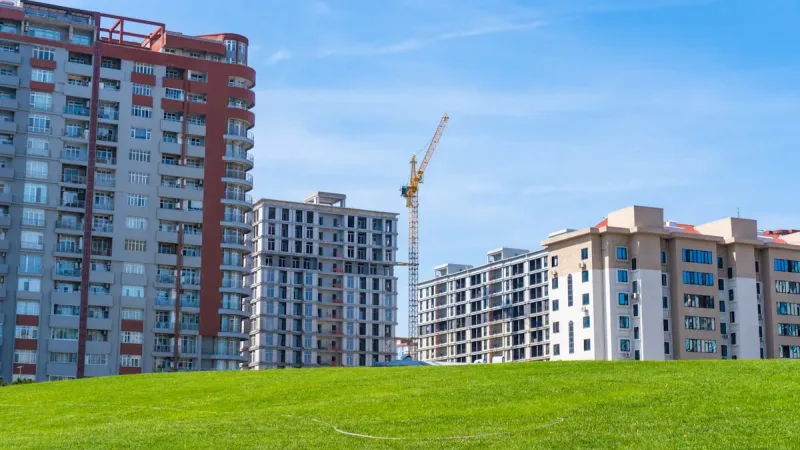
A common model in the Black Sea region: the landowner hands over their plot and receives finished units in the building in return. Here's how flat-for-land (kat karşılığı) construction works, its advantages, and the risks landowners need to watch for.
The information in this article applies to Turkey. Flat-for-land construction, known in Turkey as "kat karşılığı", is a common model especially in regions like the Black Sea, where land values are high but cash for construction is limited: the landowner transfers their plot to a contractor, and in return receives a set number of finished units (apartments, shops) in the building that gets built. The contractor covers the entire cost of construction and earns their profit by selling the remaining units.
Advantages for the landowner
- No cash investment required: The landowner turns their plot directly into a finished building without contributing to construction costs.
- The land doesn't sit idle: A vacant plot becomes income-generating finished units.
- The contractor carries the process: Construction management, material sourcing, and labor organization are the contractor's responsibility, not the landowner's.
There is one number to settle before any percentage is discussed: the plot's emsal (floor area ratio). Emsal tells you how many square metres may be built on that plot in total, and the number of units to be shared follows from it. The regulation defines emsal as the ratio of the total of all floor areas built to the area of the zoning parcel; some uses, such as open seating areas and 70 m² of a mandatory caretaker's flat, are excluded from this calculation[1], so the total construction area can turn out larger than the emsal area. A landowner weighing an offer without knowing their emsal does not really know what they are negotiating a percentage of. You can work out your own plot's emsal with our Zoning / FAR (KAKS-TAKS) Calculator.
Risks and what to watch for
- The contractor's reliability: The biggest risk is the contractor's financial strength or experience falling short. A construction project left unfinished halfway through is the worst-case scenario. Seeing projects the contractor has already completed, in person, matters.
- Clarity of the contract: The share ratio (how many units, which floor/location), the delivery date, penalty clauses, and material/quality specifications must be written with no room for ambiguity. Because the contract transfers land shares, it must be made in official form, in practice drawn up by a notary; otherwise it is not valid[2].
- Security mechanisms: Transfer of the land share to the contractor is usually tied to specific construction milestones (such as completion of the shell construction); this largely protects the landowner and should be clearly defined in the contract.
- Permit and ownership process: Who the building permit will be issued under, and at what stage the transition to condominium ownership (kat mülkiyeti) and title deed transfer will happen, should be clarified from the start.
Where MEEZ Mimarlık stands in this model
MEEZ Mimarlık is not a contracting or land-development company. We don't act as the developing party in a flat-for-land arrangement. But as a landowner evaluating a flat-for-land offer that's been presented to you, we can work with you, within the scope of architectural consulting, to assess your plot's real zoning/construction rights, whether the number of units offered is proportional to those rights, and the technical adequacy of the specification. For a first step toward clarifying your plot's zoning rights, you can check our land evaluation checklist.
If you'd like a rough sense of whether the number of units being offered is reasonable relative to the contractor's approximate construction cost, try our Construction Cost / Building Class Calculator.
Sources
- [1]Planned Areas Zoning Regulation (Planlı Alanlar İmar Yönetmeliği), Article 4 (definition of emsal) and Article 22 (uses excluded from the floor area). Official Gazette of the Republic of Turkey, 3 July 2017, No. 30113; Article 22 last amended in Official Gazette No. 30842 of 25 July 2019Last checked: 5 October 2026
- [2]Turkish Civil Code No. 4721 (Türk Medeni Kanunu), Article 706 (official form for transfers of immovable property). Official Gazette of the Republic of Turkey, 8 December 2001, No. 24607Last checked: 5 October 2026
Frequently Asked Questions
What percentage does the landowner get in a flat-for-land deal?
There is no rate fixed by law; the parties negotiate freely and the share depends on the plot's location, value, zoning rights and construction cost. The decisive input is the plot's emsal (floor area ratio). How many square metres may be built there in total. A percentage on its own also says little: which units, and how many net square metres they amount to, is not settled until the architectural project is final. So calculate the emsal before the ratio goes into the contract, and put the share in writing together with its net square metre equivalent from the project.
Does the landowner need to make a cash investment in a flat-for-land deal?
No. The landowner converts their plot directly into a finished building without contributing to the construction cost; the contractor covers the entire cost of construction and receives a set number of finished units in return.
What's the biggest risk in the flat-for-land model?
That the contractor's financial strength or experience falls short and the construction is left unfinished; seeing projects the contractor has already completed, in person, reduces this risk.
Does MEEZ Mimarlık act as the contractor in a flat-for-land model?
No, we're not a land-development party; as a landowner evaluating an offer you've received, we can assess your plot's real zoning rights and the technical adequacy of the specification within the scope of architectural consulting.